

01
Micro identity
Matrix cells, graph nodes, status marks, and dense runtime UI
26/30 · Keep directionFounder decision studio · Research, not production identity
We tested fourteen body families and more than fifty-six candidates to answer a harder question than “which eyes are friendliest?”: what physical form makes each kind of intelligence understandable, trustworthy, and useful on its real surface?
The corrected thesis
Large eyes and rounded heads can create immediate warmth, but at system scale they flatten expertise, resemble existing entertainment characters, and can make serious operators feel juvenile. Starlight should express personality through how an agent handles evidence, explains uncertainty, protects a boundary, or makes room for a human decision.
Full robots remain valuable for deep profiles and stories. Compact collaborators serve operational surfaces. Chibi and creature companions belong mainly to the Academy. Micro identities serve the graph. Instruments and rooms carry agents whose specialty is better understood through function than anatomy.
Strongest current grammar
These are directions to preserve, not finished characters. Together they solve three different scale problems without forcing every agent into the same humanoid costume.
Matrix cells, graph nodes, status marks, and dense runtime UI
26/30 · Keep direction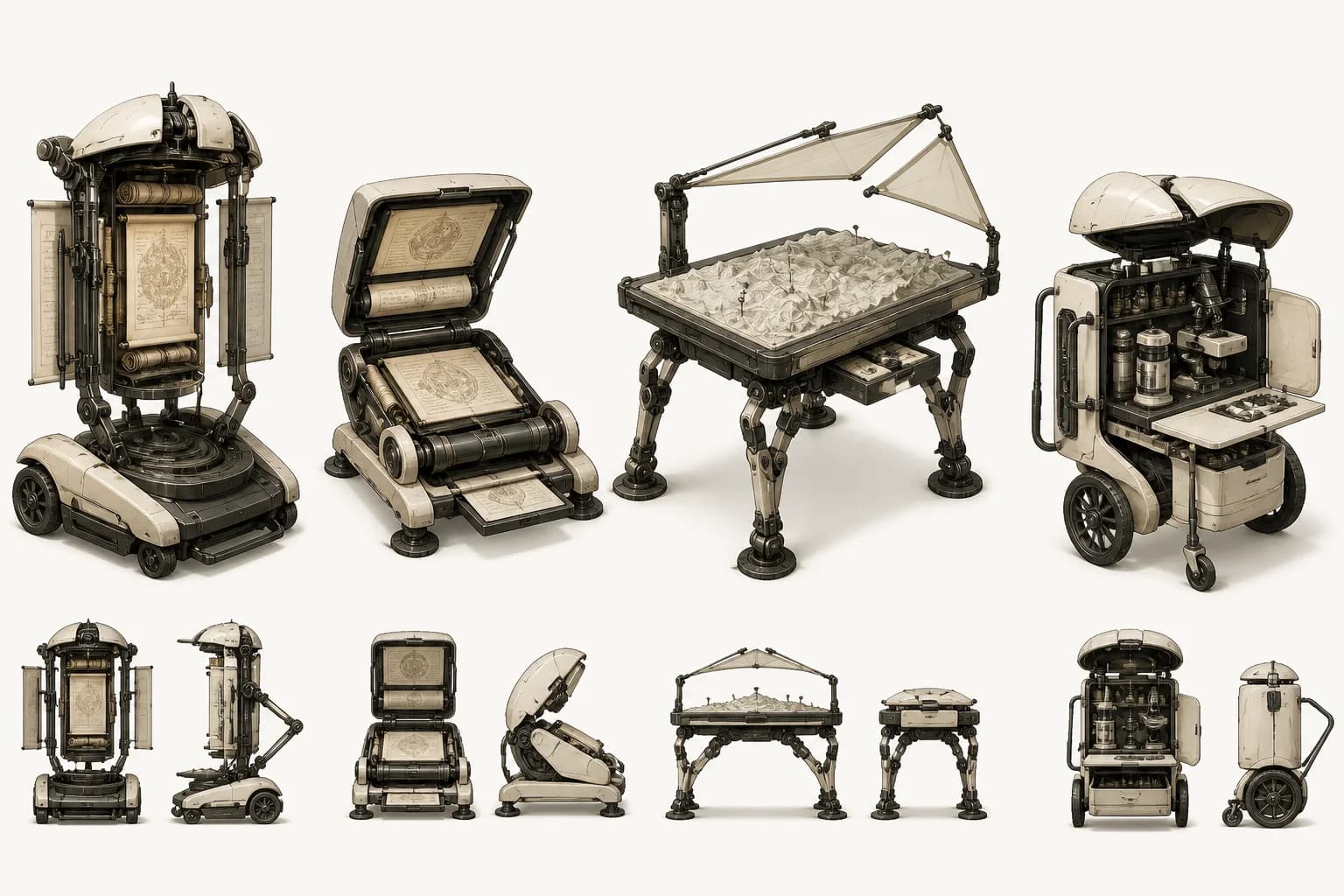
Archive, verification, transformation, and tool agents
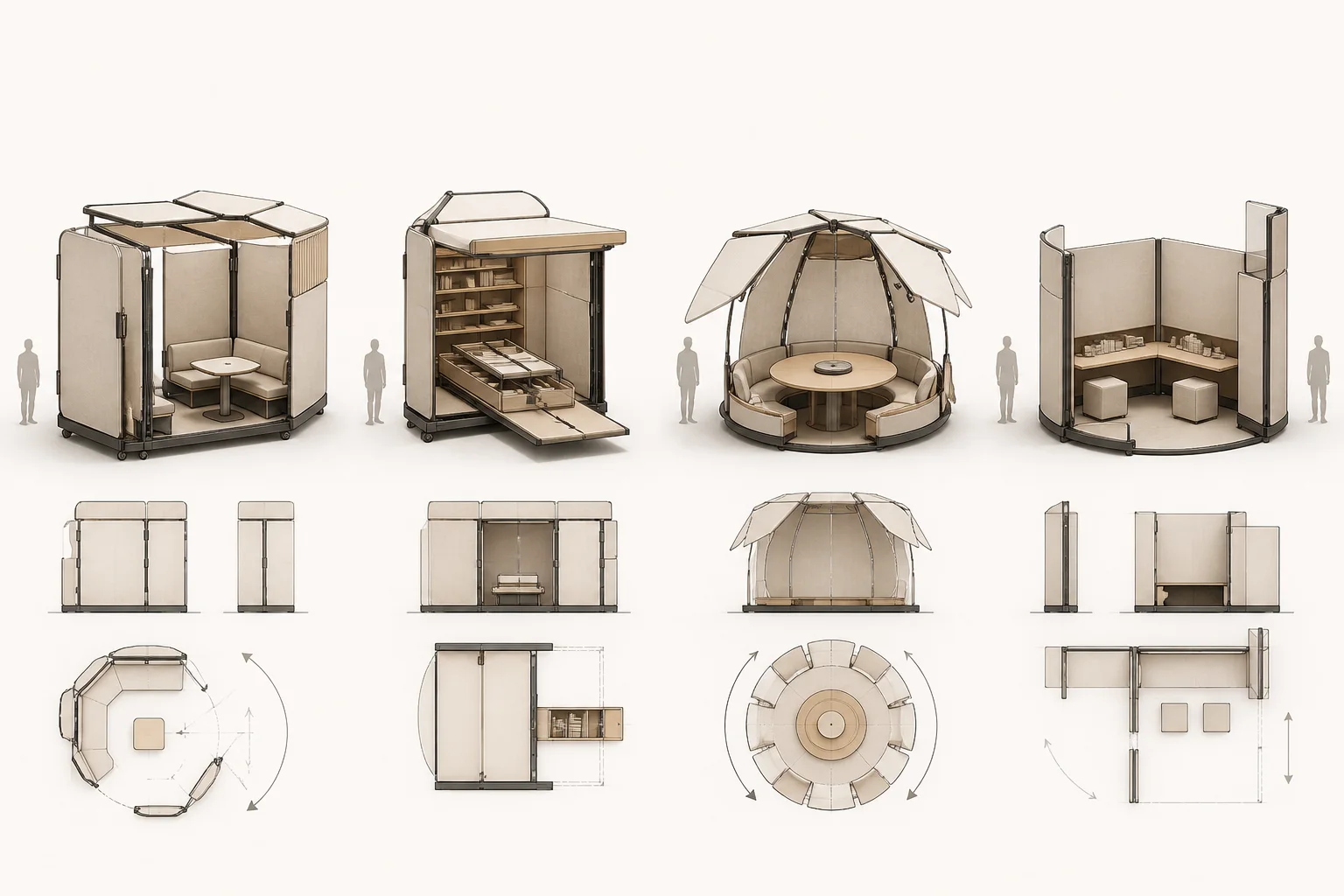
25/30 · IterateCollaborative rooms, Academy spaces, archives, and spatial intelligence
26/30 · Keep directionOne identity, several applications
A stable agent may have a graph mark, profile illustration, and Academy projection. Those are surface applications of one identity—not three different agents and never three levels of authority.
Flagship profiles and trust stories
Full form with one role-shaped instrument
Most .ai profiles and packs
Compact adult proportions; approachable, never toy-like
Onboarding and learning quests
Short-legged or companion form, only in learning context
Matrix, graph, status, and dense UI
Two or three deterministic shapes plus exact state glyphs
Archive, verification, transformation, and tools
Function-shaped device; role reads before personality
Rooms, studios, archives, and installations
Bounded environment with explicit state and provenance
Ecology, sensing, and public-interest stories
Soft biomorphic engineering without medical claims
All fourteen directions
Each row records the current visual judgment, candidate seeds worth preserving, intended surface, and the reason to keep, iterate, or restart. A polished render does not override a weak silhouette or false capability signal.
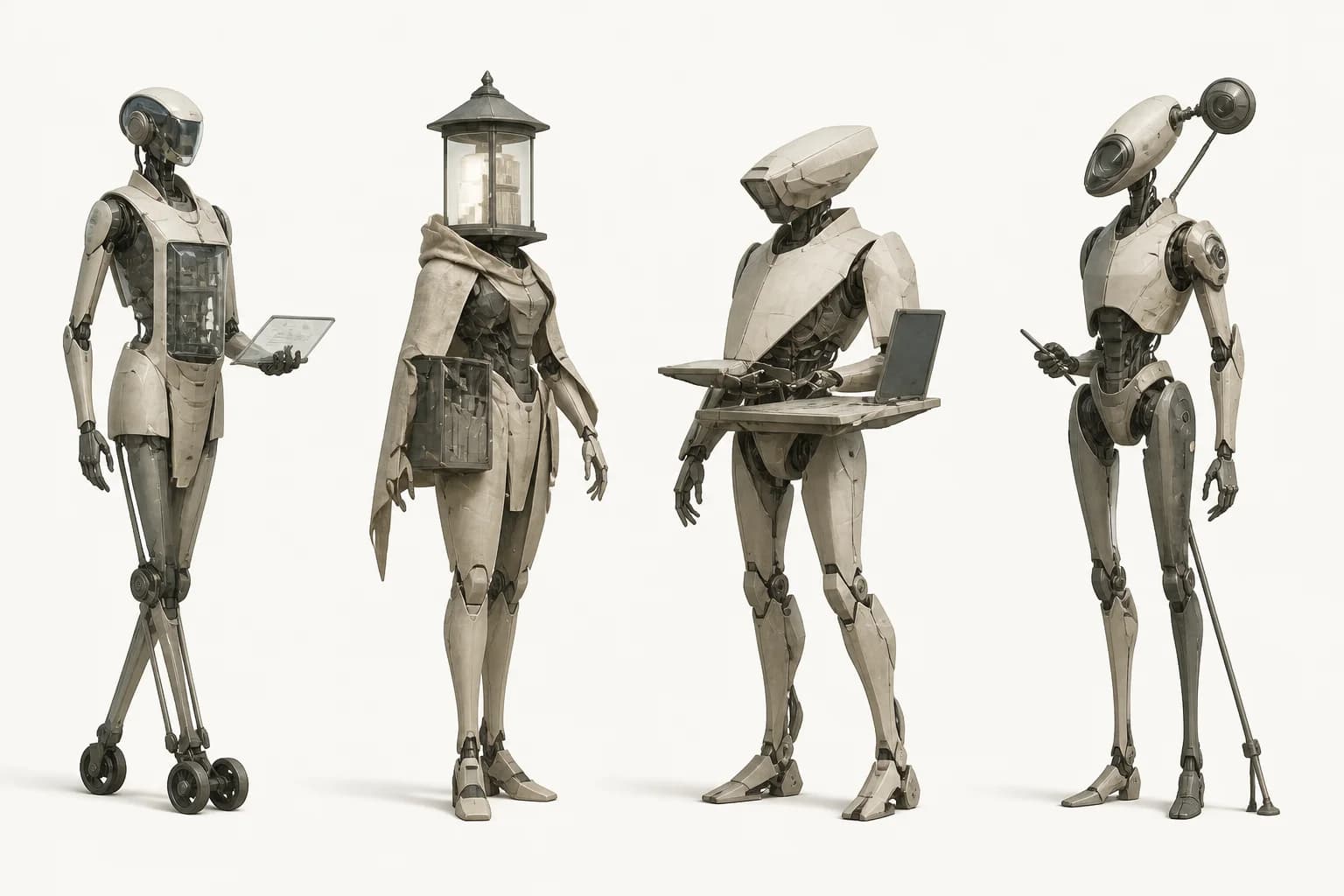
Flagship specialist stories after a complete form restart
Preserve the integrated analytical-workstation seed; the other forms drift toward generic retro humanoids or literal lantern imagery.
Advance seeds 3
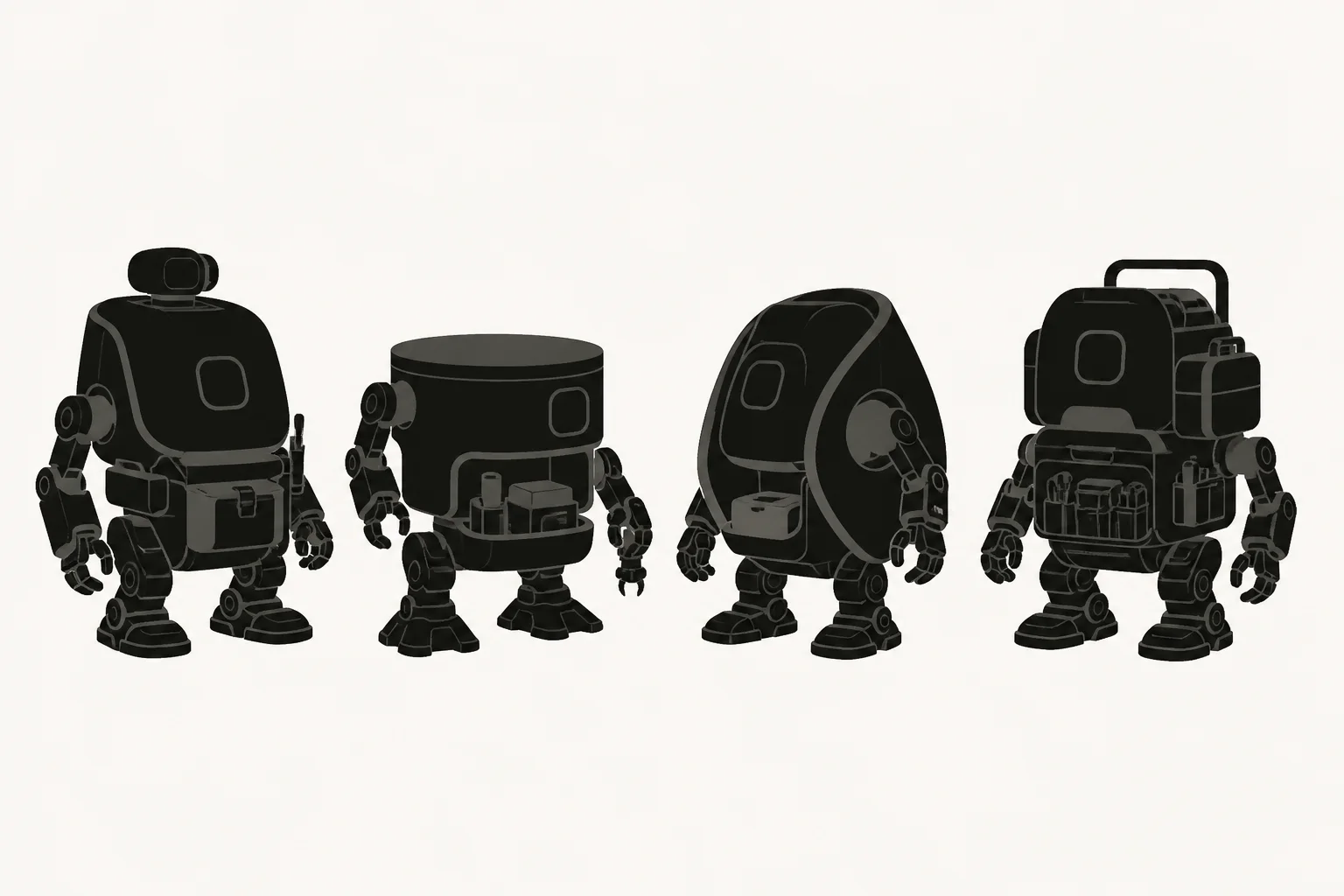
Operational profiles and marketplace packs
The most versatile body family. Simplify seams and prove that candidates three and four retain adult competence at 96 pixels.
Advance seeds 3, 4
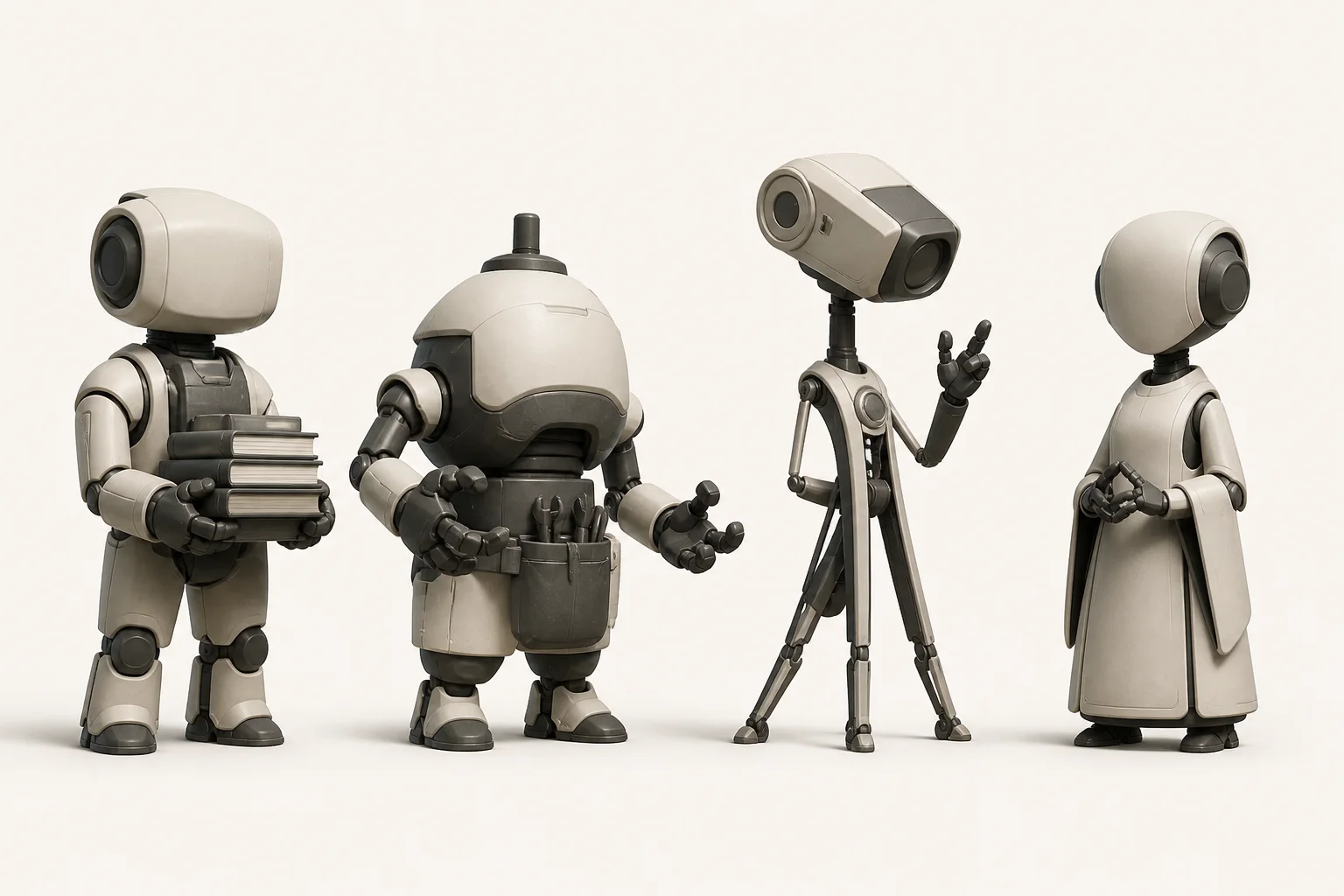
Academy onboarding and learning stories
The book tutor and workshop guide feel warm through proportion and task. Correct hands, large camera optics, and inconsistent chibi scale.
Advance seeds 1, 2
Matrix cells, graph nodes, status marks, and dense runtime UI
The strongest screen-scale family. Pair candidates one and three with exact role, state, confidence, and permission glyphs.
Advance seeds 1, 3
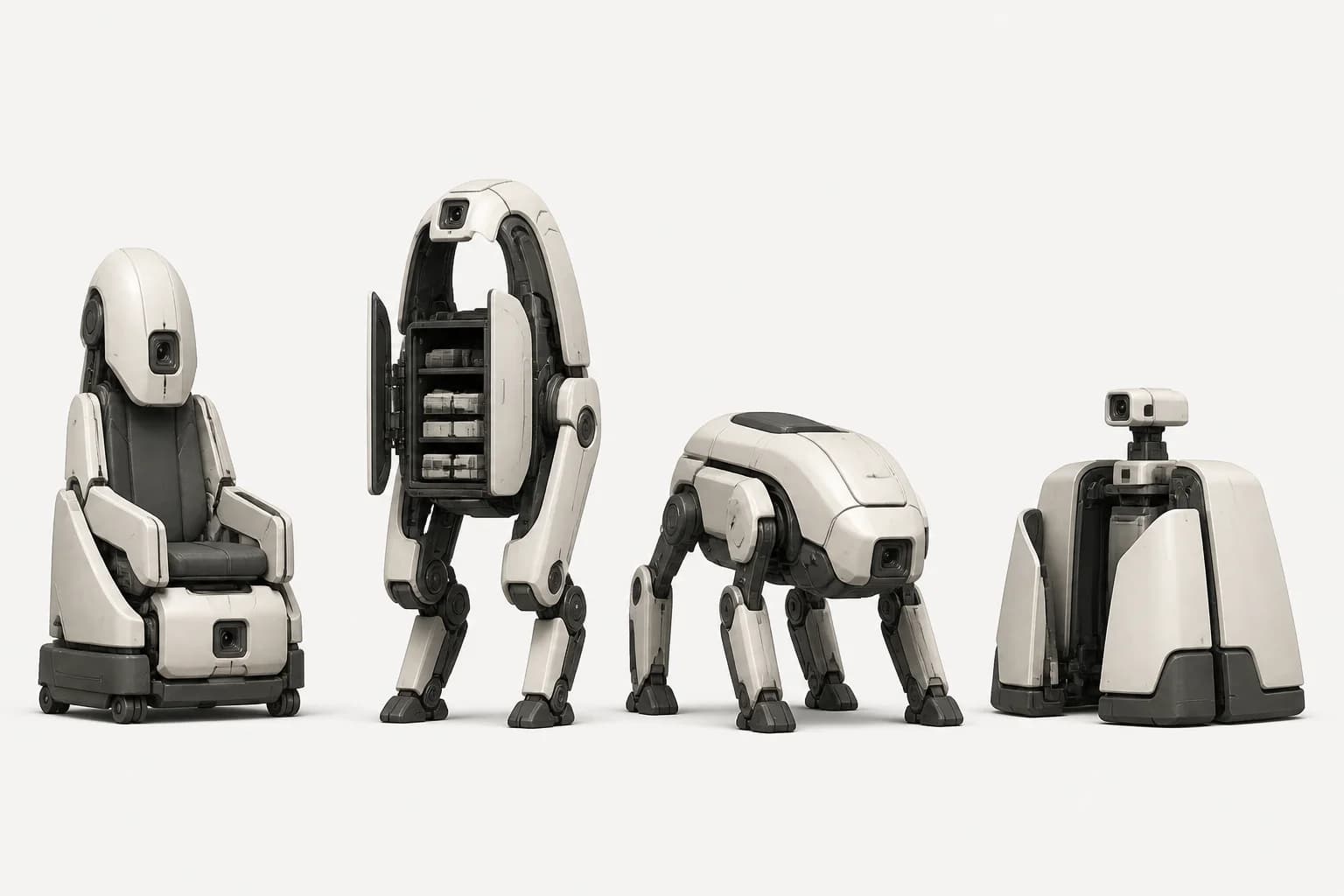
Trust, privacy, verification, and boundary stewardship
Candidates two and four communicate calm protection and inspectable evidence without weapons or enforcement posture.
Advance seeds 2, 4
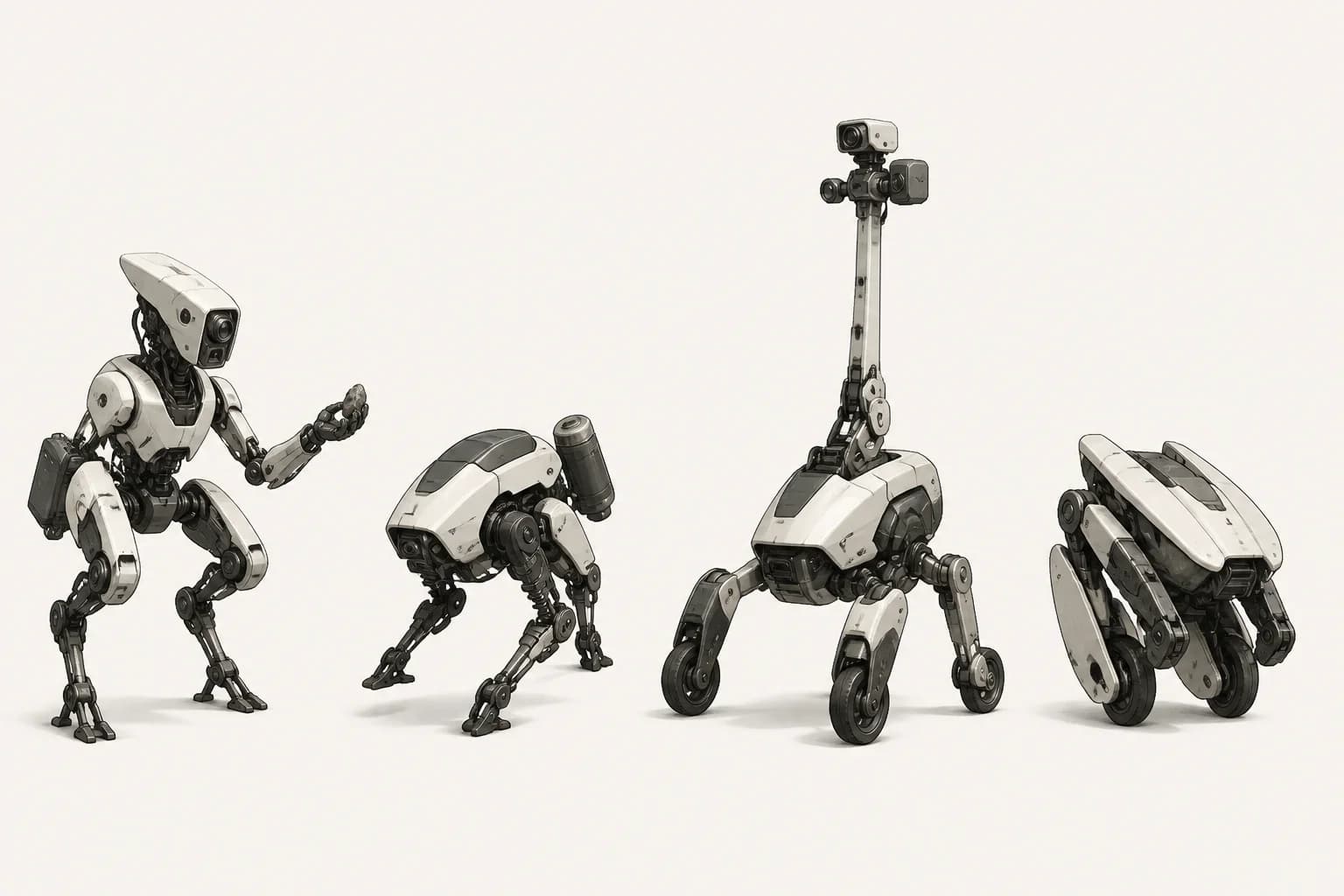
Research retrieval only after surveillance and combat cues are removed
Preserve the folding-wheel mechanics. The current optics and leg language are too close to familiar inspection, game, and surveillance robots.
Advance seeds 4
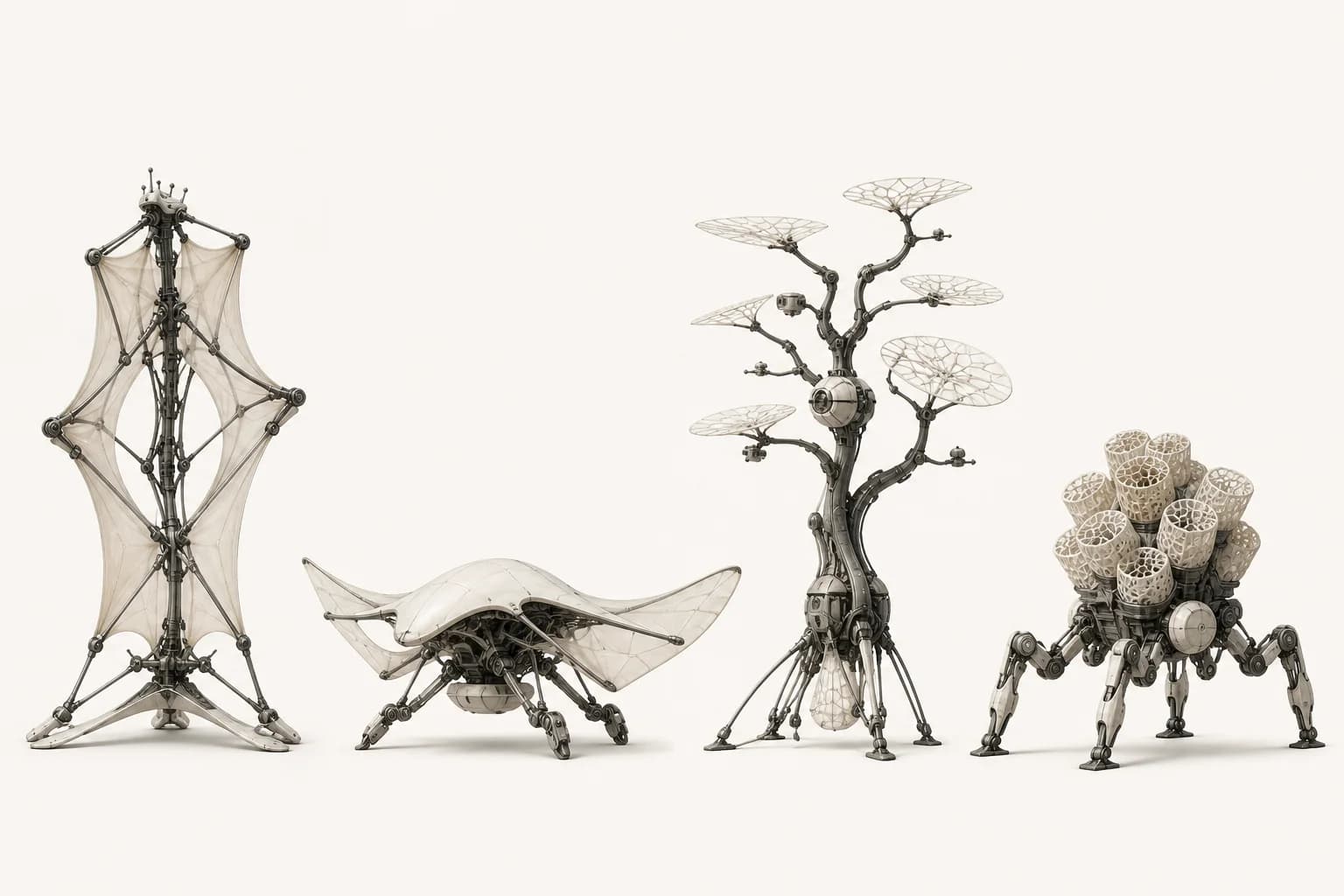
Public-interest, ecology, sensing, and spatial narratives
The most distinctive organic-mechanical territory. Simplify the membrane and manta seeds and make every load path credible.
Advance seeds 1, 2
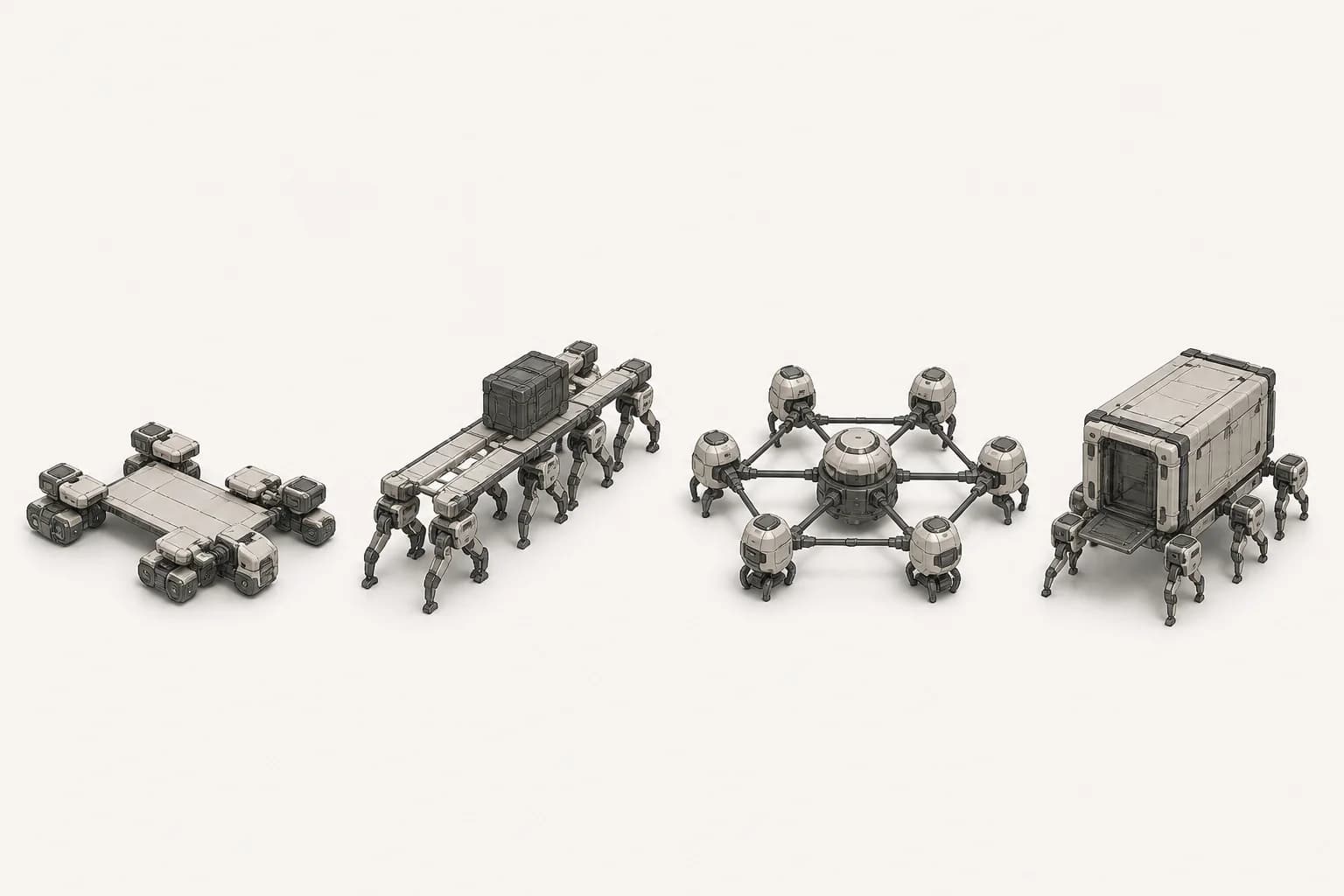
Negative evidence and a future governed relay study
Keep only the bridge behavior. The units need visible responsibilities and governance; the central hub repeats a prohibited topology cliché.
Advance seeds 2
Archive, verification, transformation, and tool agents
Function creates character before a face. Advance the archive and verification press after removing generated paper marks and antique-scroll noise.
Advance seeds 1, 2
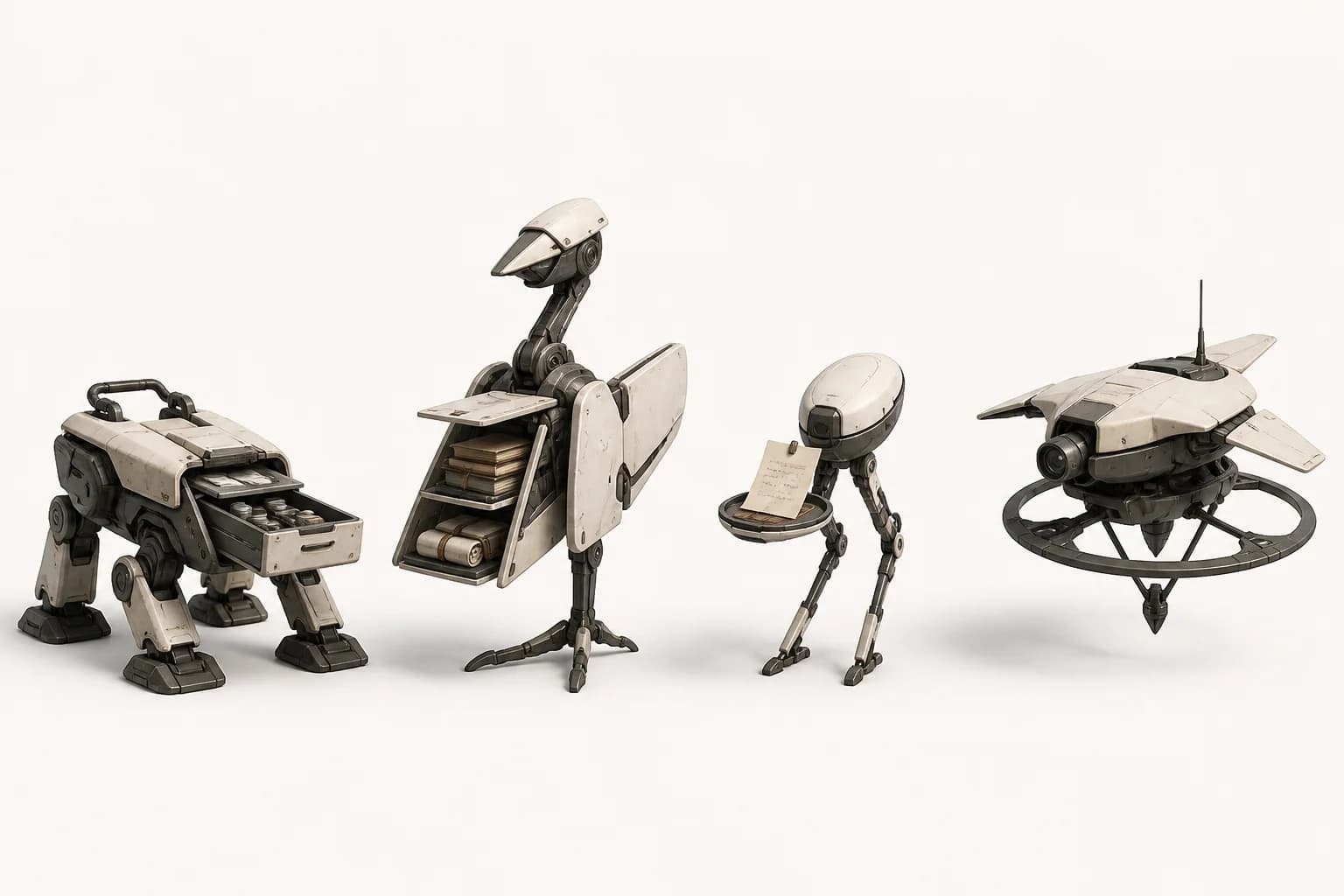
Academy companion stories
The book-carrying bird is a strong Academy seed. Restart the pet-like, mono-eye, fake-text, and drone-adjacent forms.
Advance seeds 2
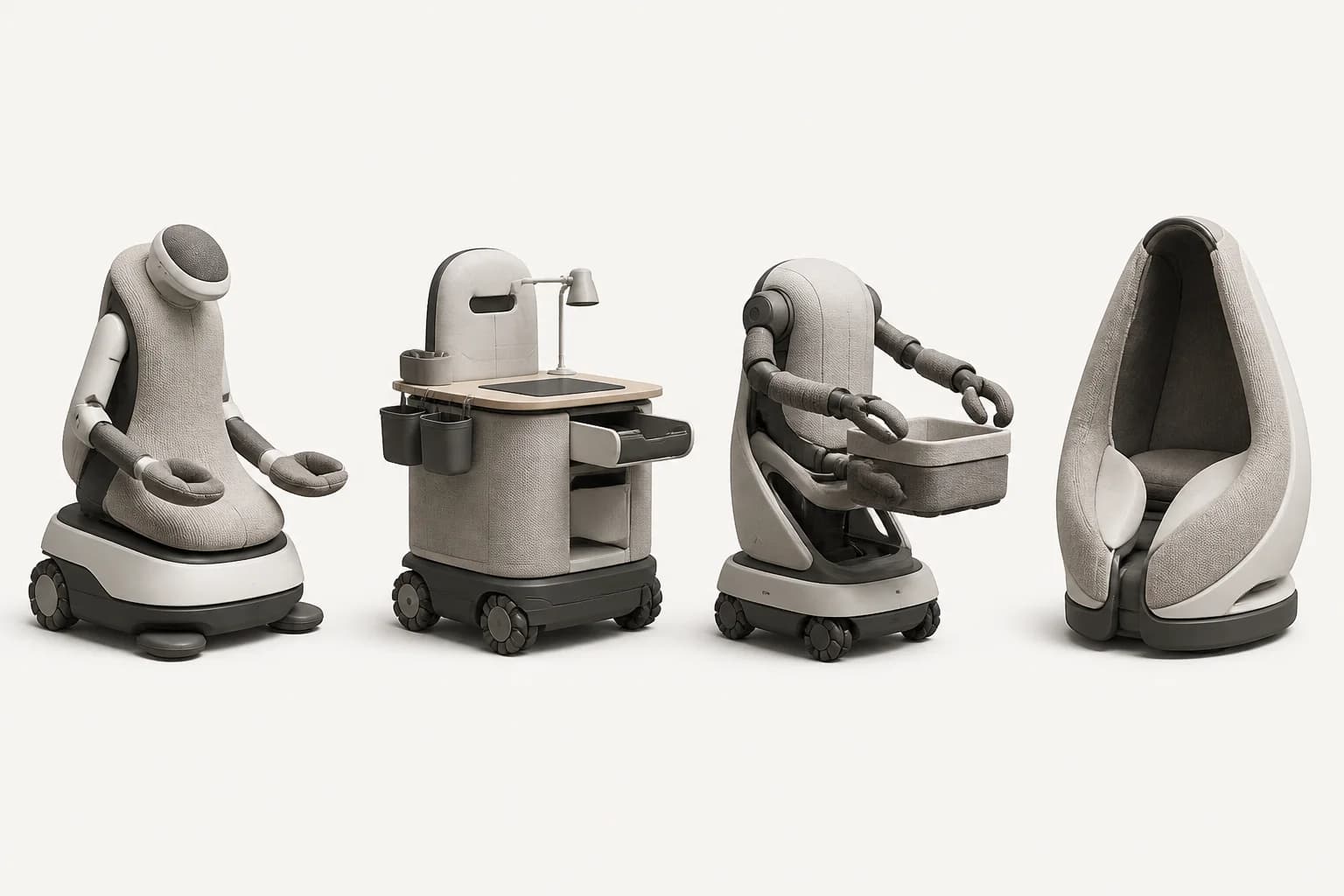
Material research for bounded rooms rather than profile characters
The soft-contact language is valuable, but the current forms read as furniture or mobility products and risk overclaiming care capability.
No current seed advances
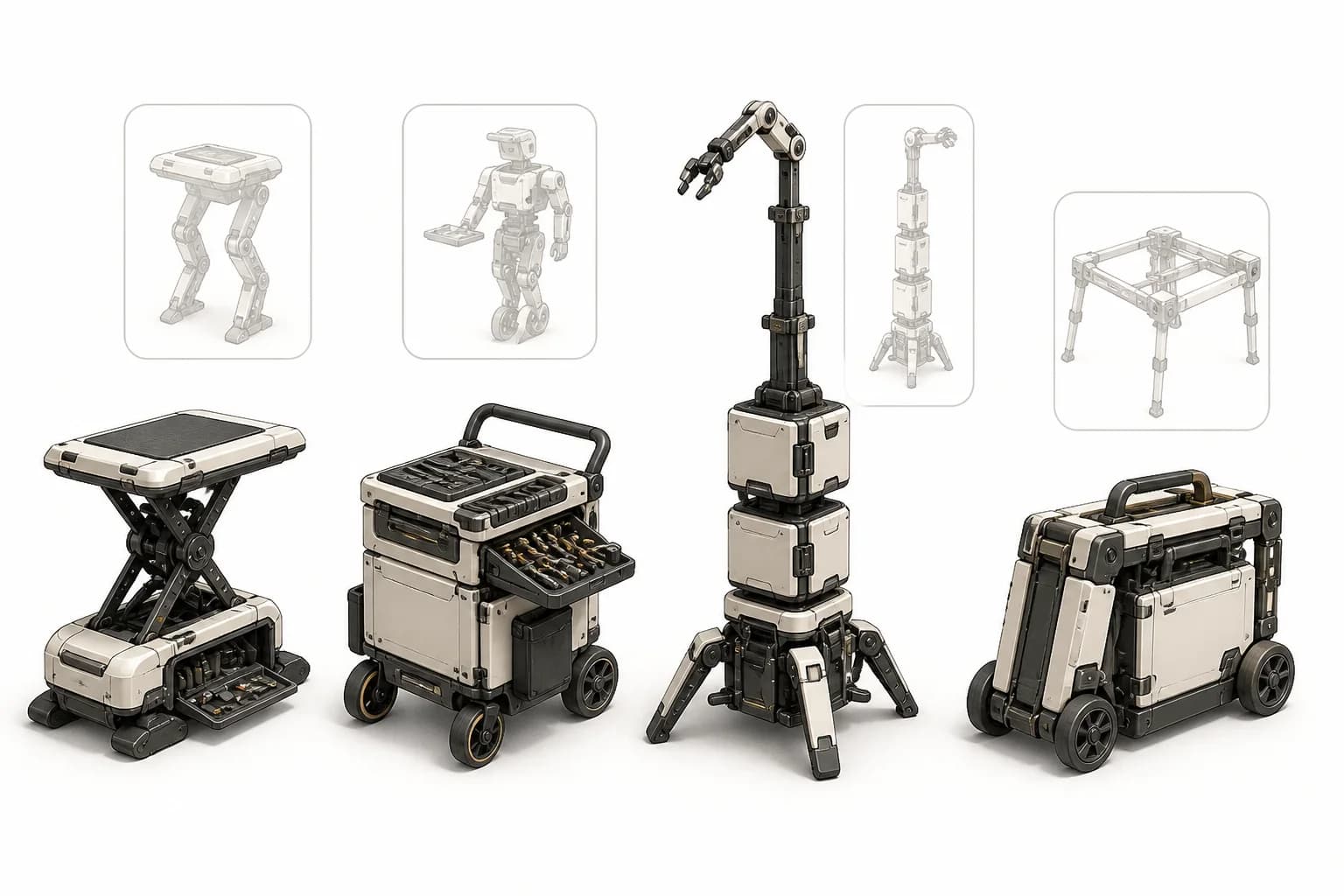
Marketplace, repair, fabrication, and spatial tools
The bench-to-fabricator is clearest. Every hinge, center of mass, and alternate mode needs a real mechanics pass.
Advance seeds 1
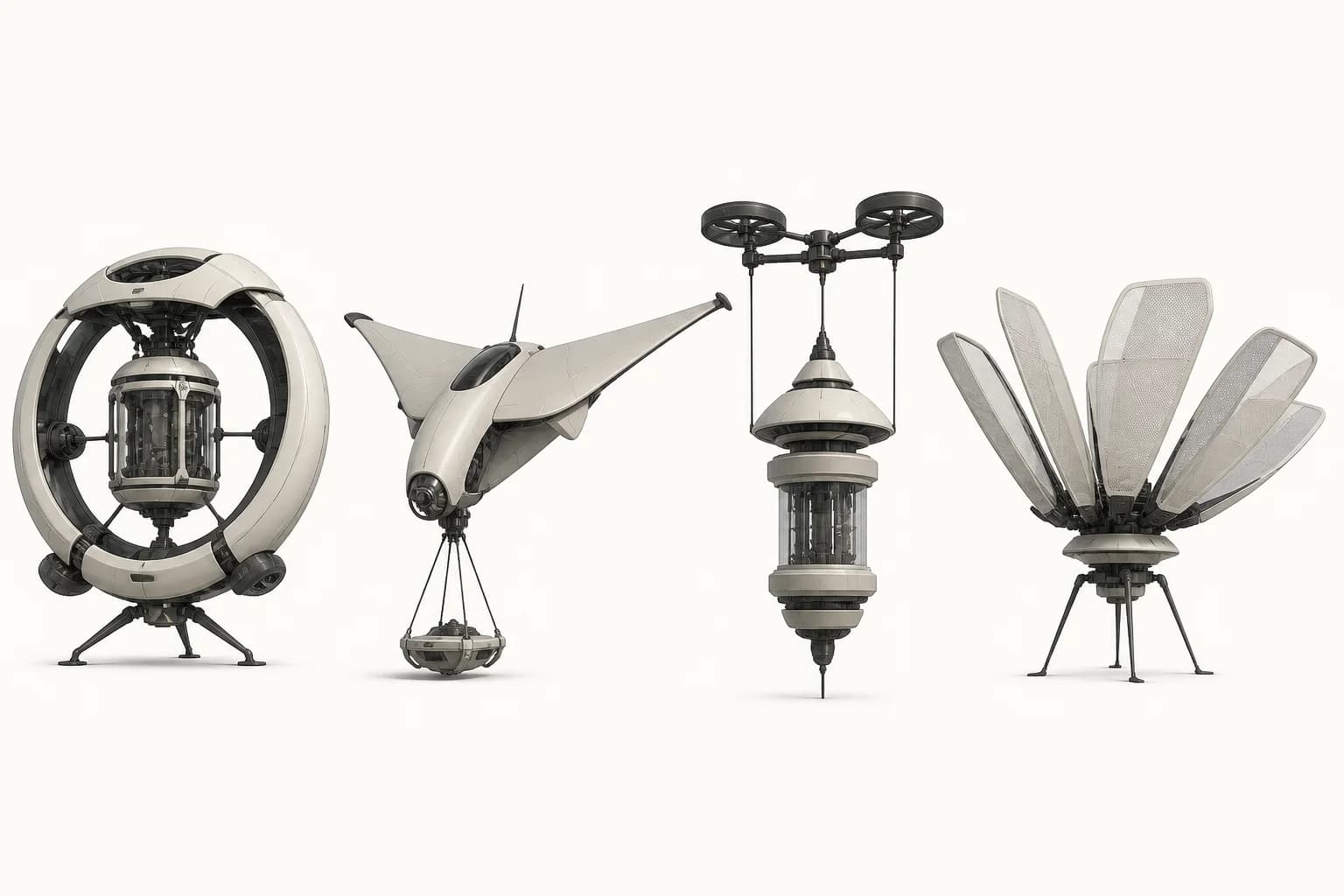
Future observatory and retrieval study after credible lift design
Knowledge work is not legible and lift logic is weak. Preserve the ring and manta architectural ideas only.
No current seed advances
Collaborative rooms, Academy spaces, archives, and spatial intelligence
The strongest proof that an agent need not resemble a person. Pair the alcove and archive doorway with explicit state and provenance UI.
Advance seeds 1, 2
Before eyes and cinematic polish
Compare the 16 strongest seeds as flat-black 96-pixel marks inside real profile, graph, mobile, Academy, and marketplace surfaces before turnarounds or face design.
Morphology is an application of stable agent identity. It never grants or implies authority, intelligence level, moral worth, gender, ethnicity, health, or capability.